

What NOT to Include on Your Resume in 2026: Critical Mistakes That Kill Your Interview Chances
Job hunting today isn’t just about having strong experience—it’s about navigating an increasingly automated and highly competitive screening environment.
Before a human recruiter even sees your resume, it often passes through Applicant Tracking Systems (ATS) that parse, score, and sort applications based on keywords, structure, and relevance. With some analyses indicating that more than 70% of resumes never make it past that first digital gatekeeper and reach a recruiter’s desk, the stakes for resume clarity and optimization have never been higher.
That means many qualified candidates are slipping through the cracks—not because they lack skills, but because their resumes aren’t structured in a way that these systems can read effectively.
From unclear formatting and missing job-specific keywords to outdated layouts, small choices can have big consequences. In this landscape, understanding what not to include on your resume is just as vital as knowing what belongs on it.
Outdated Personal Information That Screams "Delete Me"
Your Full Mailing Address
Physical addresses are resume relics. Hiring managers don’t mail interview invitations anymore—they email or call. Including your complete street address raises privacy concerns and can trigger unconscious bias based on your neighborhood or commute distance. Instead, list only your city and state. For remote positions, you can simply write “Remote” or “Open to Remote Opportunities.”
Your Photograph
Unless you’re applying in a country where headshots are standard practice, photos invite discrimination lawsuits and immediate ATS rejection. US companies particularly avoid resumes with photos to prevent age, race, and appearance bias claims. Your LinkedIn profile is where recruiters can see your professional image if they choose.
Age Indicators
Remove your graduation years, birth date, and phrases like “20+ years of experience.” Age discrimination is real, and these details give hiring managers ammunition they legally shouldn’t consider. Your experience speaks for itself without numerical timestamps.
Objective Statements Are Career Suicide
The generic “Objective: To obtain a challenging position where I can utilize my skills” paragraph might as well say “I wrote this resume in 2005.” Modern resumes demand a compelling professional summary or career headline instead—a three-to-four-line pitch highlighting your unique value proposition, key achievements, and what you bring to the employer.
Replace this: “Seeking a marketing position to grow professionally”
With this: “Digital Marketing Strategist with 8 years driving 200%+ ROI through data-driven campaigns. Specialized in SaaS customer acquisition and marketing automation optimization.”
Skills Section Disasters
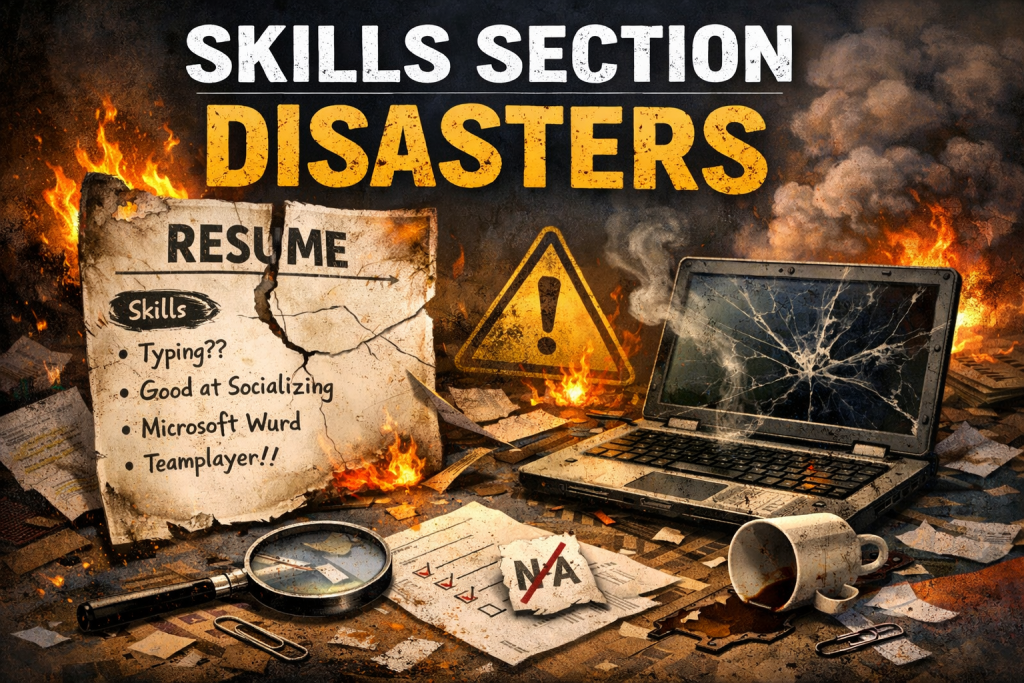
Listing “Microsoft Office” or “Email”
If you’re applying for professional roles, basic computer literacy is assumed. Dedicating precious resume space to Microsoft Word, email, or “internet research” signals you’re out of touch with workplace expectations.
Focus instead on specialized technical skills, platforms, and certifications relevant to your industry.
Inflating Skills You Don’t Have
ATS-optimized doesn’t mean keyword-stuffed with lies. Claiming expertise in Python when you’ve only watched YouTube tutorials will backfire spectacularly during technical interviews. Be honest about proficiency levels—many modern resume formats distinguish between “proficient,” “experienced,” and “expert.”
Experience Section Red Flags
Every Job You’ve Ever Had
Your high school cashier job is irrelevant when you’re 15 years into a marketing career. Limit your experience to the past 10-15 years maximum, focusing on roles relevant to your target position. Career progression and recent accomplishments matter infinitely more than ancient history.
Passive Responsibility Lists
“Responsible for managing social media accounts” tells employers nothing about your impact. Hiring managers and AI-powered resume screeners both prioritize quantifiable achievements. Transform every bullet point into results-driven statements:
- Increased Instagram engagement by 340% in six months through strategic content calendar and influencer partnerships
- Reduced customer acquisition cost by $47 per lead while scaling monthly ad spend to $50K
Irrelevant Details
Unless you’re in academia, employers don’t need your dissertation title, GPA from a decade ago, or college coursework descriptions.
These consume valuable space better used for accomplishments, certifications, and relevant projects.
The Reference Section Nobody Wants
“References available upon request” is understood universally. This outdated line wastes a full line of your resume. When employers want references, they’ll ask. Use that space for another achievement or relevant skill instead.
Personal Information That Doesn’t Belong
Hobbies, marital status, number of children, religious affiliations, and political activities rarely strengthen your candidacy and often introduce unconscious bias. The exception: hobbies directly relevant to the role (e.g., running a coding blog when applying for developer positions) can demonstrate passion and expertise.
Unprofessional Email Addresses
Your email address is often the first thing recruiters see. “Partygirl2000@” or “BeerLover84@” addresses suggest poor judgment. Create a simple firstname.lastname@gmail.com address specifically for job searching. This costs nothing and dramatically improves your professional image.
What Modern Resumes Actually Need
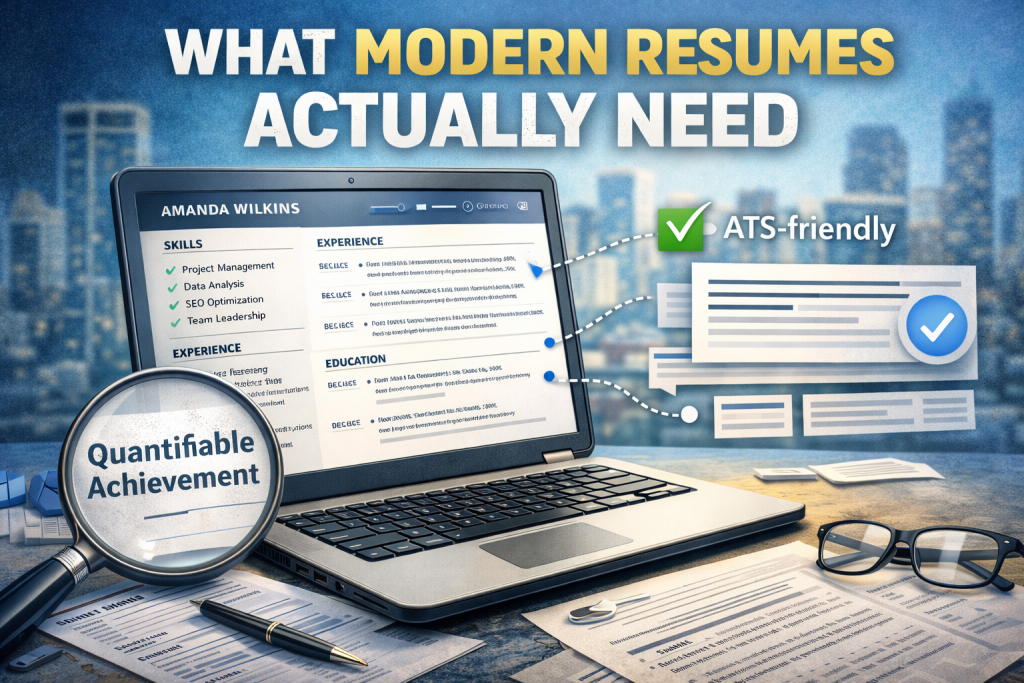
Focus your 2026 resume on:
- ATS-friendly formatting without tables, graphics, or unusual fonts
- Quantified achievements with specific metrics and outcomes
- Industry-specific keywords matching job descriptions
- Modern skills including relevant software, platforms, and methodologies
- Clean, scannable design with clear section headers
- Tailored content customized for each application
Your resume has approximately
and must first survive algorithmic screening. Every word counts. By eliminating these outdated elements, you create space for what actually matters: demonstrating you’re the solution to an employer’s specific problem.
The resume mistakes you avoid are just as important as the strengths you highlight. Clean up these problematic areas, and you’ll immediately stand out in a sea of outdated applications.
General Resume Questions
Q: How long should my resume be in 2026?
A: One page for early-career professionals (0-7 years experience), two pages for mid-to-senior level candidates. Never exceed two pages unless you’re in academia or have extensive publications and patents. Hiring managers spend an average of 7.4 seconds on initial resume scans—brevity paired with impact wins.
Q: Should I use a creative resume template with colors and graphics?
A: Only if you’re in creative fields like graphic design or marketing where visual skills are part of the job. For 95% of positions, creative templates fail ATS parsing, causing your resume to be auto-rejected. Stick with clean, traditional formatting using standard fonts (Arial, Calibri, Georgia) and simple section dividers.
Q: Do I really need to customize my resume for every job application?
A: Absolutely. Generic resumes have a 2-3% callback rate versus 15-20% for tailored versions. Spend 15-20 minutes adjusting your professional summary, reordering bullet points to match job priorities, and incorporating keywords from the job description. This dramatically increases your ATS score and human reviewer interest.
ATS and Keywords
Q: What is an Applicant Tracking System and why does it matter?
A: ATS software screens and ranks resumes before humans see them. About 75% of resumes never reach a recruiter because they score poorly in ATS systems. These programs scan for specific keywords, proper formatting, and relevant experience. Understanding ATS is critical for modern job searching success.
Q: How do I find the right keywords for my resume?
A: Analyze 5-10 job postings for your target role. Identify repeated skills, qualifications, and phrases. Look for both hard skills (software names, certifications, methodologies) and soft skills (leadership, collaboration, strategic thinking). Naturally incorporate these exact phrases into your resume where truthful and relevant.
Q: Can I use different job titles than what I officially had?
A: You can add clarifying titles in parentheses, but never completely change your official title. If you were “Marketing Specialist III” but functioned as a content manager, write “Marketing Specialist III (Content Marketing Lead).” This helps ATS matching while maintaining honesty that background checks will verify.
Work History and Experience
Q: What if I have employment gaps? Should I explain them on my resume?
A: Don’t highlight gaps on the resume itself—address them in your cover letter or interview. Use years instead of months for employment dates (2022-2024 vs. January 2022-March 2024) to minimize visible gaps. If the gap involved relevant activities like freelancing, courses, or volunteer work, consider listing these.
Q: Should I include jobs I was fired from or left after a short time?
A: Include them if leaving them off creates larger timeline gaps. Focus bullet points on accomplishments during your tenure. You’ll explain the departure in interviews, but excluding short-term jobs often raises more questions during background checks than including them strategically.
Q: How far back should my work history go?
A: 10-15 years maximum for most industries. Older experience can be summarized briefly under “Earlier Career” with just job titles and companies—no dates or details. This keeps your resume focused on recent, relevant accomplishments while avoiding age discrimination triggers.
Skills and Qualifications
Q: Where should certifications go on my resume?
A: Active, relevant certifications deserve prominent placement—either in a dedicated “Certifications” section near the top or within your professional summary. Industry-recognized credentials (PMP, CPA, Six Sigma, Google Analytics) significantly boost ATS rankings and human interest.
Q: Should I list skills I’m currently learning but not yet proficient in?
A: No. Your resume represents current, demonstrable capabilities. However, mention ongoing learning in your cover letter or LinkedIn “About” section. This shows growth mindset without misrepresenting your skill level for positions requiring immediate expertise.
Q: What’s the difference between hard skills and soft skills, and which matter more?
A: Hard skills are measurable, technical abilities (Python, AutoCAD, Salesforce). Soft skills are interpersonal qualities (leadership, communication, problem-solving). ATS systems primarily scan for hard skills, but demonstrate soft skills through achievement-focused bullet points showing leadership, collaboration, or innovation in action.
Formatting and Design
Q: Can I use PDF or should I submit Word documents?
A: PDFs preserve formatting but some older ATS systems struggle with them. Check the job posting—if it specifies a format, use it. When no preference is stated, Word documents (.docx) are safer for ATS compatibility. Never use .pages, .odt, or image files.
Q: Are LinkedIn URLs necessary on resumes?
A: Yes. Your LinkedIn profile provides deeper insight into your professional brand, recommendations, and expanded work history. Place a clean, customized LinkedIn URL (linkedin.com/in/yourname) in your header contact section. Ensure your profile matches your resume’s narrative.
Q: Should I use resume writing AI tools or templates?
A: Templates from professional sites like Canva, Resume.io, or Microsoft can provide ATS-friendly structures. AI tools can help generate achievement-focused bullet points, but always customize and verify accuracy. Never submit generic AI-generated content—it lacks the specific metrics and authentic voice that employers seek.
Getting More Interviews
Q: Why am I not getting interview callbacks despite submitting dozens of applications?
A: Common culprits include: ATS-incompatible formatting, generic rather than tailored content, lack of quantified achievements, outdated skills, or applying to positions mismatched with your qualifications. Audit your resume against this checklist and consider having a professional review it.
Q: How many jobs should I apply to weekly for maximum interview opportunities?
A: Quality trumps quantity. 5-10 highly targeted, customized applications yield better results than 50 generic submissions. Spend time researching companies, tailoring your resume, and writing personalized cover letters for positions matching 70%+ of your qualifications.
Q: Should I follow up after submitting my resume?
A: For online applications through ATS portals, following up rarely helps. Instead, leverage networking—find employees on LinkedIn, engage with company content, or reach out to hiring managers directly with personalized messages. Referrals increase interview chances by 400% compared to cold applications.
Q: What’s the single most important resume improvement I can make today?
A: Transform every bullet point into a quantified achievement. Replace “Managed team projects” with “Led 5-person cross-functional team delivering $2M project 3 weeks ahead of schedule, reducing costs by 18%.” Numbers, percentages, timeframes, and outcomes immediately differentiate you from generic applicants.
Outdated resume elements can instantly disqualify you from job opportunities before a human ever reviews your application. With 75% of resumes rejected by Applicant Tracking Systems, knowing what to exclude is critical for interview success.
Key Elements to Remove Immediately:
Outdated Personal Information: Full mailing addresses, photographs, age indicators, and graduation years invite discrimination and waste valuable space. List only city/state and professional contact details.
Objective Statements: Replace generic “seeking a challenging position” paragraphs with compelling professional summaries that highlight your unique value and quantifiable achievements.
Irrelevant Skills: Basic proficiencies like Microsoft Office and email are assumed. Focus on specialized technical skills, industry-specific platforms, and relevant certifications instead.
Ancient Work History: Limit experience to the past 10-15 years. Your high school job doesn’t belong on a professional resume when you’re years into your career.
Passive Responsibility Lists: Transform “responsible for” statements into achievement-focused bullets with specific metrics, percentages, and outcomes.
Reference Lines: “References available upon request” is universally understood and wastes space better used for accomplishments.
Personal Details: Hobbies, marital status, religious affiliations, and political activities rarely strengthen candidacy and often introduce unconscious bias.
What Modern Resumes Need:
Focus on ATS-friendly formatting, quantified achievements with specific metrics, industry keywords matching job descriptions, modern relevant skills, clean scannable design, and tailored content for each application. Every word must earn its place—your resume has approximately six seconds to impress human reviewers after surviving algorithmic screening.
The mistakes you avoid are equally important as the strengths you showcase. Eliminating these outdated elements immediately positions you ahead of candidates still using 2005 resume strategies.
Create a free resume and cover letter with ResumeShaperAI! Click here to get started.
Learn about the 15 common resume mistakes toa void when you create your next resume here.