
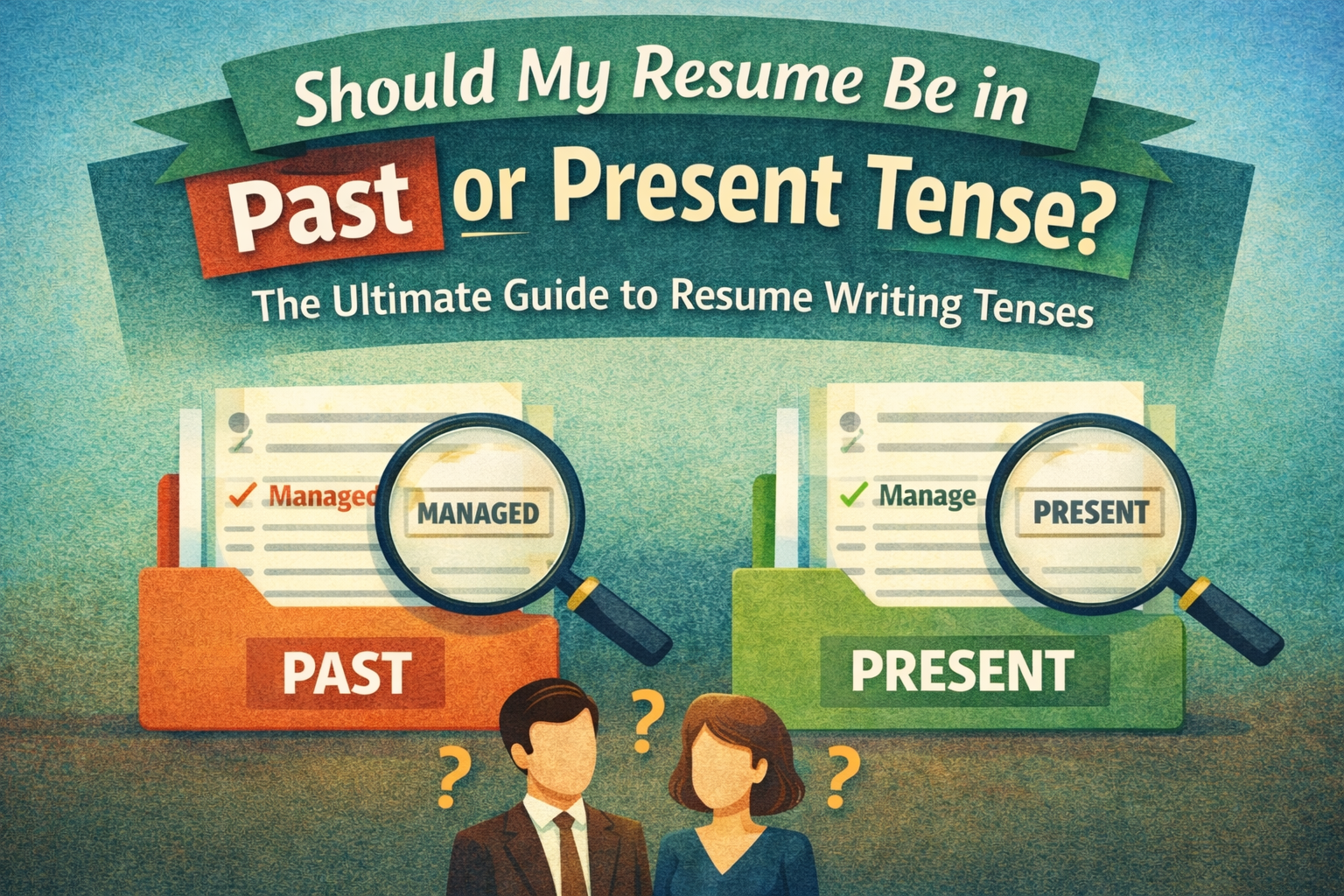
Should My Resume Be in Past or Present Tense? The Ultimate Guide to Resume Writing Tenses
Writing a resume can feel overwhelming, especially when you’re unsure about seemingly small details like verb tense. Should you use past tense or present tense? Does it matter? The answer is yes—and getting it right can make your resume look more professional and polished.
This ultimate guide will walk you through everything you need to know about using proper tense on your resume, including common mistakes to avoid and expert tips to make your resume stand out.
The Golden Rule: Past for Past Jobs, Present for Current Roles
The fundamental rule for resume tense is straightforward: use present tense for your current position and past tense for all previous positions. This creates a clear timeline that helps hiring managers immediately understand your career progression.
For example, if you’re currently working as a Marketing Manager, you would write: “Develop social media strategies to increase brand awareness.” For a previous role, you’d write: “Developed social media strategies that increased brand awareness by 40%.”
This consistency signals to recruiters that you’re detail-oriented and professional—qualities every employer values.
How to Use Present Tense on Your Resume Correctly
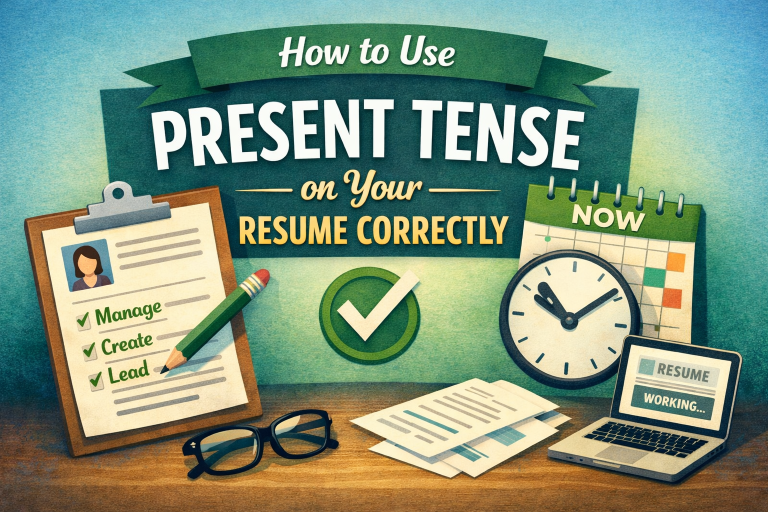
When describing your current job responsibilities, use present tense action verbs. This shows you’re actively engaged in these tasks right now.
Examples of present tense resume bullets:
- Manage a team of 12 sales representatives across three regions
- Create quarterly financial reports for executive leadership
- Coordinate cross-functional projects with marketing and product teams
- Analyze customer data to identify trends and opportunities
- Lead weekly team meetings to align on priorities and goals
The key is to use strong, active verbs that demonstrate your impact. Words like “manage,” “develop,” “coordinate,” “analyze,” and “implement” are powerful choices that showcase your contributions.
When to Use Past Tense on Your Resume
All previous positions should use past tense exclusively. This applies to any job you’ve left, whether you resigned, were promoted internally, or the company closed.
Examples of past tense resume bullets:
- Managed a team of 12 sales representatives, achieving 115% of annual targets
- Created a new customer onboarding process that reduced churn by 25%
- Coordinated the successful launch of five major products in two years
- Analyzed market trends to inform strategic decision-making
- Led the implementation of a new CRM system across the organization
Notice how these bullets often include quantifiable achievements. Past tense gives you the opportunity to showcase completed accomplishments with measurable results.
The Exception: Ongoing Projects at Former Jobs
Here’s where it gets slightly tricky. What if you started a project at a previous job that’s still ongoing? The answer: still use past tense.
Even if the project you initiated continues without you, you should describe your contributions in past tense since you’re no longer actively working on it. Focus on what you accomplished during your tenure, not what’s happening now.
Example: “Launched a sustainability initiative that reduced company waste by 30% in the first year” (not “launch” just because the initiative continues).
Resume Tense for Different Sections

Work Experience Section
This is where the past/present tense rule matters most. Each position should be internally consistent—don’t mix tenses within the same job description.
Volunteer Work and Internships
Follow the same rules as paid positions. If you’re currently volunteering, use present tense. Past volunteer roles get past tense.
Projects and Certifications
For project descriptions, use past tense since these are completed works. For certifications that require ongoing education or renewal, you can say “Maintain certification in…” or simply list the credential with an expiration date.
Common Resume Tense Mistakes to Avoid
Mixing tenses in the same role: This is the most common error. If you’re describing a current position, every bullet point should use present tense. Don’t switch between “Manage team projects” and “Led the implementation of new software.”
Using past tense for current jobs: Some job seekers mistakenly use past tense for everything, which can confuse recruiters about whether you’re still employed.
Inconsistent formatting: If one current position uses present tense and another uses past tense (perhaps because you copy-pasted from an old resume), it creates confusion.
Using passive voice: Regardless of tense, always use active voice. Write “Increased sales by 20%” not “Sales were increased by 20%.”
Should You Use First Person on a Resume?
Never use first-person pronouns (I, me, my) on a resume. Instead of “I managed a team,” simply write “Managed a team.” This implied first-person approach keeps your resume concise and professional.
Power Verbs for Present and Past Tense Resumes
The right action verbs can transform your resume from bland to impressive. Here are some powerful options:
Present tense: Achieve, analyze, build, coordinate, create, deliver, develop, drive, execute, facilitate, generate, implement, improve, launch, lead, manage, optimize, oversee, produce, streamline, supervise, transform
Past tense: Achieved, analyzed, built, coordinated, created, delivered, developed, drove, executed, facilitated, generated, implemented, improved, launched, led, managed, optimized, oversaw, produced, streamlined, supervised, transformed
How Resume Tense Affects ATS (Applicant Tracking Systems)

Applicant Tracking Systems scan resumes for keywords, and using the correct tense can impact how well your resume performs. Many ATS systems are programmed to recognize both present and past tense versions of action verbs, but consistency improves your chances of being properly parsed.
Additionally, some ATS software may flag resumes with tense inconsistencies as less polished, potentially lowering your ranking in the system.
Final Tips for Resume Tense Perfection
Before submitting your resume, review it carefully for tense consistency. Read through each position separately to ensure all bullets within that role use the same tense. Have someone else proofread your resume—fresh eyes often catch mistakes you’ve overlooked.
Remember, your resume is often your first impression with a potential employer. Proper tense usage demonstrates attention to detail, communication skills, and professionalism. While it may seem like a minor detail, these small things add up to create a compelling picture of you as a candidate.
By following these guidelines, you’ll create a polished, professional resume that clearly communicates your experience and qualifications—and that’s exactly what hiring managers want to see.
Frequently Asked Questions
Q: What tense should I use if I have two current jobs? A: Use present tense for both positions. Each current role should have all bullet points in present tense, showing you’re actively performing these responsibilities.
Q: Can I mix tenses within the same bullet point? A: No, never mix tenses in a single bullet point. Each statement should use one consistent tense throughout.
Q: What tense should I use for a job I just left last week? A: Past tense. Even if you left recently, the position is no longer current, so all descriptions should be in past tense.
Q: Should I use present tense for accomplishments in my current role? A: Yes, but frame them carefully. Use present tense for ongoing responsibilities and completed achievements alike. For example: “Increased sales by 30% through strategic partnership development.”
Q: What if I’m on a leave of absence from my current job? A: If you’re planning to return and the position is technically still yours, use present tense. If you’re uncertain about returning, consider using past tense or noting the leave status.
Q: Do I need to use action verbs for every bullet point? A: Yes, every bullet point should start with a strong action verb. Avoid weak phrases like “Responsible for” or “Duties included.”
Create a resume that will pass the ATS systems and get you interviews fast. Start for free here.