

What Are the Red Flags on a Resume? 7 Warning Signs Recruiters Notice Immediately
In today’s competitive job market, your resume needs to make a strong first impression. Recruiters and hiring managers typically spend just six to seven seconds scanning each resume before deciding whether to read further or move on to the next candidate. During that brief window, they’re trained to spot red flags that signal potential problems.
Whether you’re crafting a resume for writing jobs or applying for any other position, understanding what recruiters look for, and what makes them hesitate, can dramatically improve your chances of landing an interview. In this guide, we’ll explore the seven most common resume red flags that catch a recruiter’s attention for all the wrong reasons, plus practical resume tips to help you avoid these pitfalls.
1. Frequent Job Hopping Without Clear Progression
One of the first things recruiters notice is your employment history timeline. If you’ve held five different positions in three years without a clear upward trajectory, that’s a major warning sign.
Why it matters: Frequent job changes suggest you might be difficult to work with, lack commitment, or leave when challenges arise. Hiring and training new employees is expensive, so companies want to invest in candidates who will stick around.
How to address it: If you do have a varied work history, use your resume to tell a coherent story. Show how each role built specific skills that led to your next opportunity. For writing jobs, for instance, you might explain how freelance gigs developed your versatility while contract positions honed specialized expertise.
Resume builder tip: Many AI resume builders now include templates that help you frame job transitions positively by emphasizing skills gained rather than just listing dates.
2. Unexplained Employment Gaps
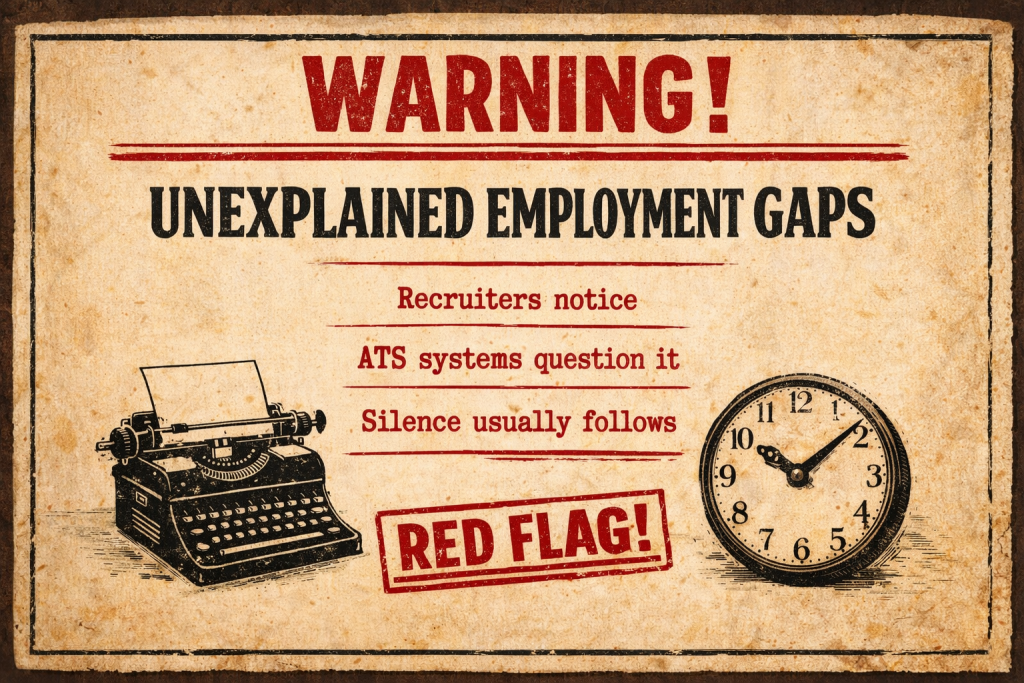
Gaps in your work history aren’t automatically disqualifying, but failing to address them is a red flag. Recruiters notice missing months or years and wonder what happened during that time.
Why it matters: Unexplained gaps raise questions about your reliability and whether your skills are current. In fast-moving fields like technology or digital marketing, even a year away can mean you’ve fallen behind on industry developments.
How to address it: Be honest and strategic. If you took time off for caregiving, education, health issues, or even a career pivot, briefly acknowledge it. Many modern resume formats include a summary section where you can address gaps without making them the focus.
Best practice for resume writing: If you were freelancing, volunteering, taking courses, or working on personal projects during a gap, include those activities. A resume for writing jobs might list freelance articles, blog development, or content strategy consulting during transition periods.
3. Typos, Grammar Mistakes, and Formatting Inconsistencies
Nothing kills your credibility faster than careless errors. A single typo might be forgiven, but multiple mistakes suggest you lack attention to detail or didn’t care enough to proofread.
Why it matters: Your resume is the one document you have complete control over in the hiring process. If you can’t present yourself error-free here, recruiters question what your work quality will be like. This is especially critical for resume for writing jobs, where attention to language is the core skill.
How to address it: Always proofread multiple times. Read your resume backward, sentence by sentence, to catch typos. Use spelling and grammar tools, but don’t rely on them exclusively. Have someone else review it with fresh eyes.
Pro resume tip: Check for consistency in formatting—bullet points should all use the same style, dates should follow the same format, and fonts should be uniform throughout.
4. Vague, Generic Descriptions That Could Apply to Anyone
Recruiters can spot copy-and-paste job descriptions from a mile away. If your bullet points sound like they came from a generic job posting rather than describing your actual accomplishments, that’s a red flag.
Why it matters: Generic descriptions tell recruiters nothing about what makes you unique or what value you specifically brought to previous roles. Phrases like “responsible for managing projects” or “worked with team members” are so broad they’re meaningless.
How to address it: Focus on specific, quantifiable achievements. Instead of “wrote content for company blog,” try “produced 40+ SEO-optimized blog posts that increased organic traffic by 67% in six months.” Use numbers, percentages, and concrete results whenever possible.
AI resume builder advantage: Quality AI resume builders can help you transform generic descriptions into achievement-focused statements by prompting you with questions about measurable outcomes.
5. Irrelevant Information That Clutters Your Resume
Including outdated skills, unrelated hobbies, or every job you’ve ever had since high school dilutes your message and suggests poor judgment about what matters.
Why it matters: Recruiters want to see that you understand the position you’re applying for and can highlight relevant qualifications. A cluttered resume makes them work harder to find what they need—and they simply won’t do that work.
How to address it: Tailor your resume for each application. For a resume for writing jobs, emphasize writing samples, content management experience, and SEO knowledge. You can leave off your high school lifeguarding job or unrelated college internships from years ago.
Resume tips for optimization: Keep your resume to one or two pages maximum. If something doesn’t directly support your candidacy for this specific role, cut it.
6. Obvious Resume Padding or Exaggerated Titles
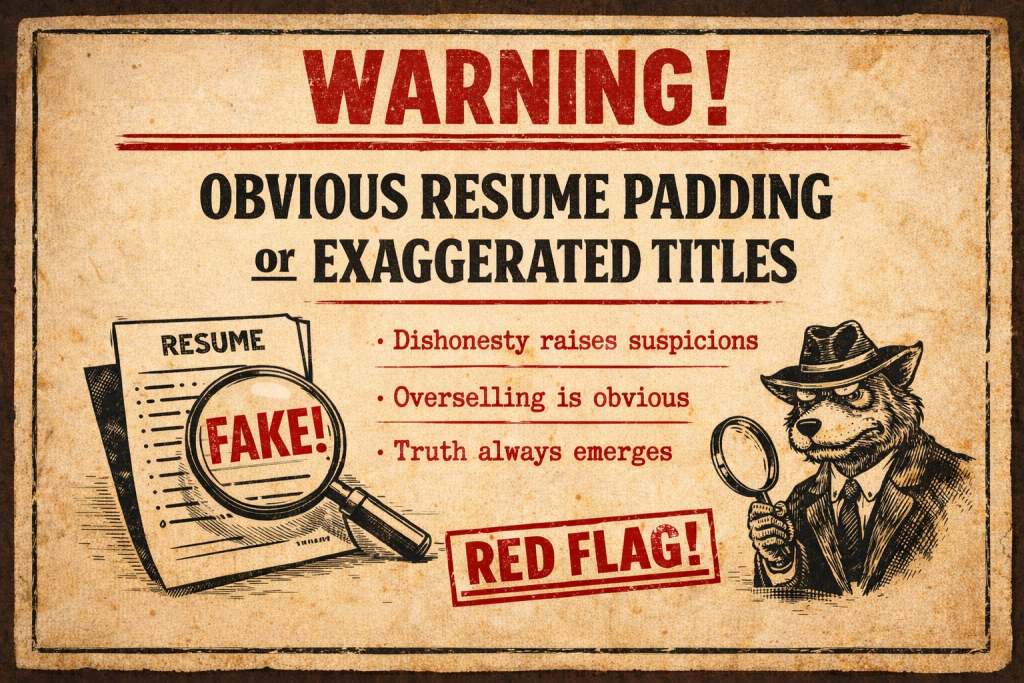
Inflating your role or responsibilities is one of the fastest ways to lose credibility. Recruiters are experienced at spotting inflated titles and checking claims during reference checks.
Why it matters: Dishonesty about your background destroys trust before you even get an interview. If you’re caught exaggerating, you’ll be immediately disqualified. Even if you make it through the hiring process, companies can terminate employees who lied on their resumes.
How to address it: Be honest about your level and contributions. If you were a “Marketing Coordinator” don’t claim you were “Director of Marketing.” Instead, focus on the impressive work you did accomplish in that coordinator role.
Smart resume strategy: You can frame your experience positively without lying. “Led social media strategy” is accurate if you managed those campaigns, even if you weren’t the department head.
7. No Measurable Results or Accomplishments
A resume that lists duties rather than achievements tells recruiters nothing about your actual performance or value.
Why it matters: Any employee can show up and complete assigned tasks. What companies really want to know is whether you excel, solve problems, and deliver results beyond the baseline expectations.
How to address it: Transform every bullet point into an accomplishment statement. Use the PAR (Problem-Action-Result) or STAR (Situation-Task-Action-Result) method to structure your descriptions.
Example transformation:
- Before: “Managed company newsletter”
- After: “Redesigned monthly newsletter, increasing open rates from 12% to 31% and generating 45 qualified leads per month”
For writing positions specifically: Include metrics like traffic growth, engagement rates, conversion improvements, or content volume. Even if you’re new to professional writing, you can discuss academic achievements, publications, or blog statistics.
Bonus Resume Tips for Job Seekers
Beyond avoiding red flags, here are a few additional resume tips to strengthen your application:
Use keywords strategically: Many companies use Applicant Tracking Systems (ATS) that scan for relevant keywords before a human ever sees your resume. Review the job description and incorporate important terms naturally throughout your resume.
Consider an AI resume builder: Modern AI resume builders can help you optimize formatting, suggest stronger action verbs, and ensure your resume passes ATS screening. They’re particularly helpful if you’re not sure how to structure your experience effectively.
Update regularly: Don’t wait until you’re job hunting to refresh your resume. Update it quarterly with new accomplishments while they’re fresh in your mind.
Get feedback: Ask colleagues in your industry to review your resume. They can spot red flags you might miss and suggest improvements based on what they know recruiters value.
Final Thoughts
Your resume is your marketing document—it needs to sell your candidacy while avoiding any signals that might give recruiters pause. By understanding these seven red flags and taking steps to address them, you’ll create a resume that gets past that critical six-second scan and lands you more interviews.
Remember, the goal isn’t perfection; it’s presenting yourself as a strong, reliable candidate worth a conversation. Focus on telling a clear, honest story of your professional journey with specific accomplishments that demonstrate your value. Whether you craft your resume manually or use an AI resume builder, these principles will help you avoid common pitfalls and stand out for the right reasons.
Take the time to review your current resume through a recruiter’s eyes. Which of these red flags might apply to your situation? Addressing them now could be the difference between getting overlooked and landing your next great opportunity.
Frequently Asked Questions About Resume Red Flags
What are the biggest red flags on a resume?
The biggest red flags recruiters notice include frequent job hopping without career progression, unexplained employment gaps, typos and grammar mistakes, vague job descriptions without measurable results, inflated job titles, and irrelevant information that clutters the document. These issues signal potential problems with reliability, attention to detail, or honesty.
How can I explain job hopping on my resume?
To address frequent job changes, focus on telling a coherent career story that shows progression and skill development. Emphasize what you learned from each position and how it contributed to your professional growth. Consider using a functional or combination resume format that highlights skills over chronological work history. Be prepared to discuss your moves positively in interviews, focusing on seeking new challenges rather than running from problems.
Should I use an AI resume builder or write my resume manually?
Both approaches have merit. AI resume builders offer advantages like ATS optimization, professional formatting, and suggestions for stronger language and accomplishment statements. They’re particularly helpful if you’re unsure about structure or struggling to quantify achievements. However, manually written resumes can feel more personalized. The best approach is often hybrid—use an AI resume builder for structure and optimization, then customize the content to reflect your unique voice and experiences.
How far back should my resume go to avoid red flags?
For most professionals, 10-15 years of work history is sufficient. Recent graduates or early-career professionals should include all relevant experience, even if it goes back further. Older positions can be summarized briefly or grouped under “Earlier Career Experience” if they’re relevant to your current goals. The key is keeping your resume focused on recent, relevant accomplishments rather than creating an exhaustive career history.
What are red flags on a resume for writing jobs specifically?
For resume for writing jobs, recruiters pay extra attention to grammar, spelling, and formatting since writing quality is the core skill being evaluated. Additional red flags include lacking quantifiable results (like traffic metrics or engagement rates), missing portfolio links or writing samples, vague descriptions of writing projects, and no evidence of SEO knowledge or digital content experience. Any writing error on a writer’s resume is particularly damaging.
How do I address employment gaps without raising red flags?
Be honest and brief about employment gaps. You can include freelance work, consulting, professional development, volunteer activities, or personal projects during gap periods. Use a functional resume format that emphasizes skills over chronology if gaps are extensive. In your cover letter or resume summary, you might briefly mention taking time for caregiving, education, health matters, or career transition—but keep the focus on what you accomplished and learned during that time rather than dwelling on the gap itself.
Can typos on a resume really cost me a job opportunity?
Yes, absolutely. Studies show that 58% of resumes contain typos, and many recruiters report automatically rejecting candidates with obvious errors. Typos signal carelessness, lack of attention to detail, and poor communication skills. For positions requiring precision—especially resume for writing jobs—even a single typo can be disqualifying. Always proofread multiple times, use grammar-checking tools, and have someone else review your resume before submitting.
What’s the difference between resume red flags and deal-breakers?
Resume red flags are warning signs that make recruiters scrutinize your application more carefully or hesitate before moving forward. They’re concerning but potentially explainable. Deal-breakers are issues that immediately disqualify you, such as obvious lies about education or employment, criminal background that conflicts with job requirements, or completely lacking required qualifications. Red flags can be overcome with strong overall credentials; deal-breakers typically cannot.
How many pages should my resume be to avoid looking unfocused?
One to two pages is the standard. Entry-level candidates and those with less than 10 years of experience should stick to one page. Experienced professionals can extend to two pages if the content is relevant and substantial. Resumes longer than two pages are a red flag suggesting you can’t prioritize information effectively. Academic CVs are the exception, as they require comprehensive publication and research listings.
Should I include references on my resume or is that a red flag?
Don’t include references directly on your resume—it’s outdated and wastes valuable space. The phrase “references available upon request” is also unnecessary, as employers assume you’ll provide references when asked. Instead, prepare a separate reference sheet to submit when requested. Using resume space for references rather than accomplishments is a minor red flag that suggests you’re following outdated resume tips.
How can I make my resume stand out without raising red flags?
Focus on specific, quantifiable achievements rather than generic duties. Use strong action verbs and industry-specific keywords relevant to the position. Ensure clean, professional formatting that’s easy to scan. Tailor your resume to each job application by emphasizing the most relevant experience. Include links to portfolios, LinkedIn profiles, or professional websites where appropriate. The goal is standing out through substance and relevance, not gimmicks like unusual fonts, colors, or graphics that might raise red flags about your professionalism.
What resume mistakes do applicants make most often?
The most common resume mistakes include using generic, template language instead of specific achievements, failing to tailor the resume to the job description, including irrelevant information, poor formatting that’s hard to scan, lacking keywords for ATS systems, writing in first person or using complete sentences instead of bullet points, and failing to quantify accomplishments with numbers and metrics. Many candidates also make the mistake of listing job duties rather than showcasing how they excelled in their roles.