
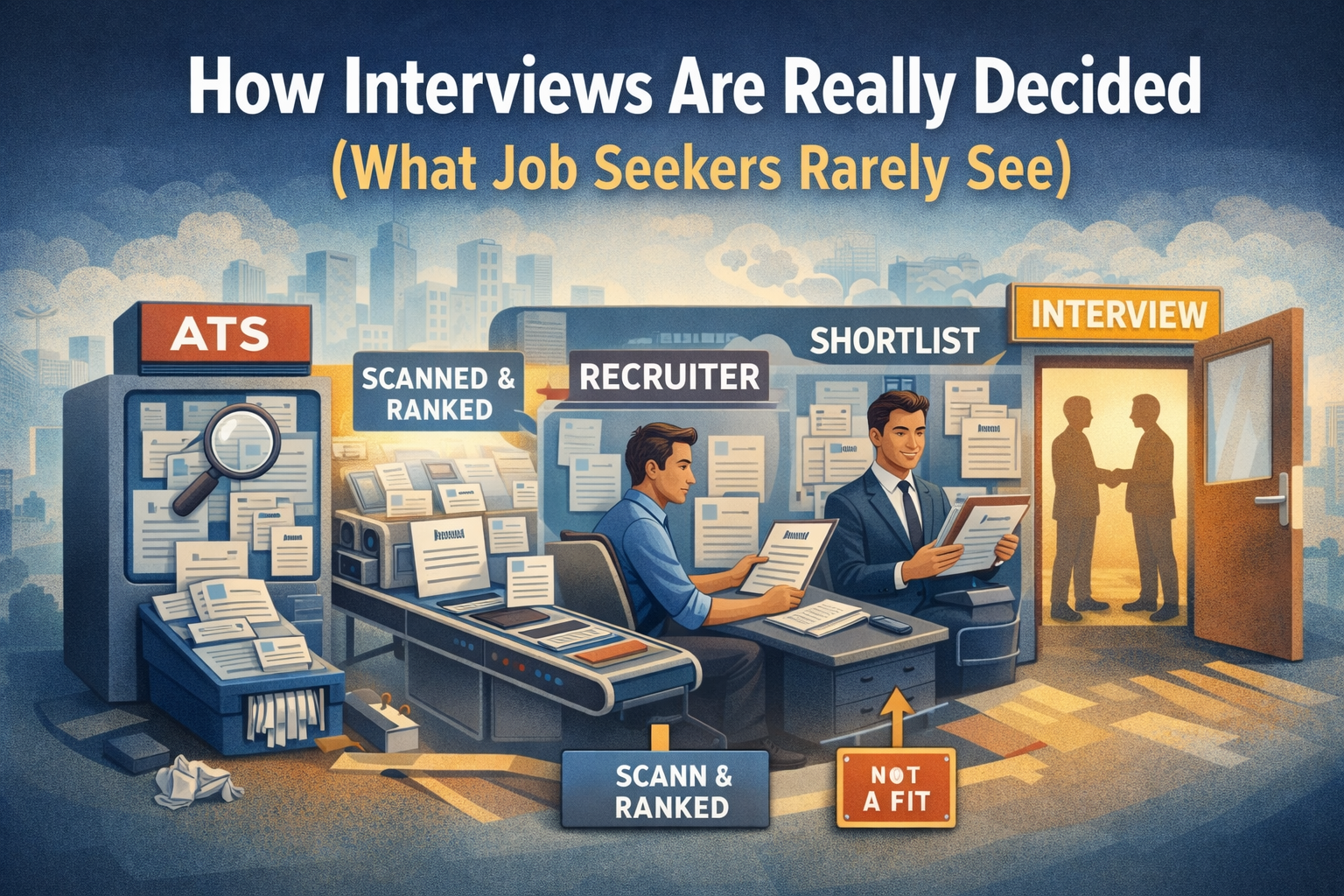
Before a recruiter ever sees your resume, it’s usually reviewed by an applicant tracking system, often called an ATS.
This step plays a major role in how interviews are decided, yet many job seekers don’t realize it’s happening at all.
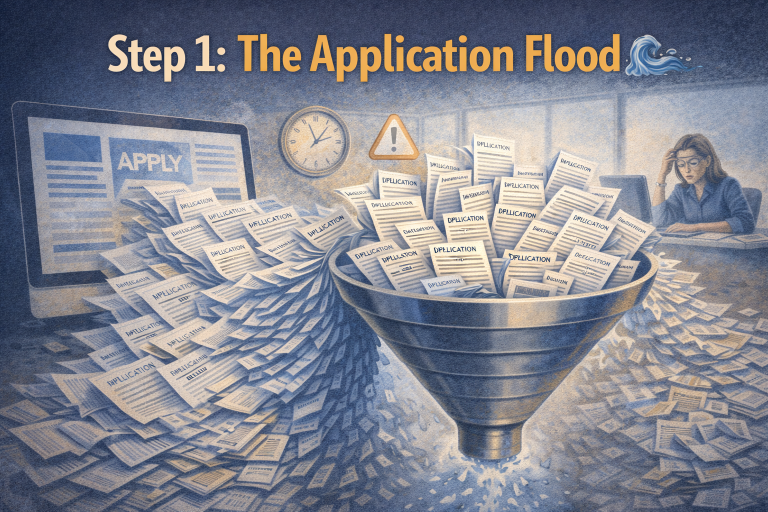
At this stage, the system isn’t evaluating your potential, experience depth, or work ethic — it’s simply organizing and sorting resume data so humans can manage the volume.
Applicant tracking systems scan for things like job titles that closely match the role, resume keywords that align with the job description, and clear work history with consistent dates.
They also rely heavily on resume formatting and structure, since poorly formatted resumes can be difficult for ATS software to read correctly.
If your resume doesn’t clearly fit into the categories the system expects, it may never reach a recruiter’s inbox — even if you’re fully qualified and capable of doing the job.
This behind-the-scenes filtering is one of the biggest reasons qualified candidates aren’t getting interviews and why so many people search for how interviews are really decided.
In many cases, the decision to move forward or filter a resume out happens automatically, without any human involvement at all 🤖 — which explains why the process can feel confusing, impersonal, and frustrating for job seekers.

