

Using AI for Job Hunting: What Works, What Fails & What You Should Skip
In the last few years, Artificial Intelligence (AI) has transformed the job search landscape. From resume optimization to interview prep, AI promises to make your job hunt faster, smarter, and more efficient. But not all AI tools are created equal, and not all strategies will help you land your dream job. Some can even slow you down or misrepresent your skills.
In this guide, we’ll break down exactly what works, what fails, and what to skip when using AI for job hunting. Whether you’re a recent graduate, a mid-career professional, or someone considering a career pivot, understanding the real capabilities—and limitations—of AI can save you time and frustration.
What Works: AI Strategies That Actually Improve Your Job Hunt
AI tools can give you a competitive edge if used correctly. Here are the strategies that have proven effective:
1. AI-Powered Resume Builders
One of the most impactful uses of AI is for creating resumes that stand out and pass Applicant Tracking Systems (ATS). Modern resume builders use AI to:
Optimize keyword usage for your target roles.
Suggest strong action verbs and phrasing.
Improve formatting and layout for readability.
Why it works: Recruiters often spend seconds scanning a resume. AI can help your resume highlight the skills and experience that match the job description, increasing your chances of getting noticed.
Example tools: ResumeShaperAI, Zety, Kickresume.
Tip: Use AI as a guide but always review the final resume for accuracy and personalization. Overreliance can make your resume sound generic.
2. Personalized Cover Letters
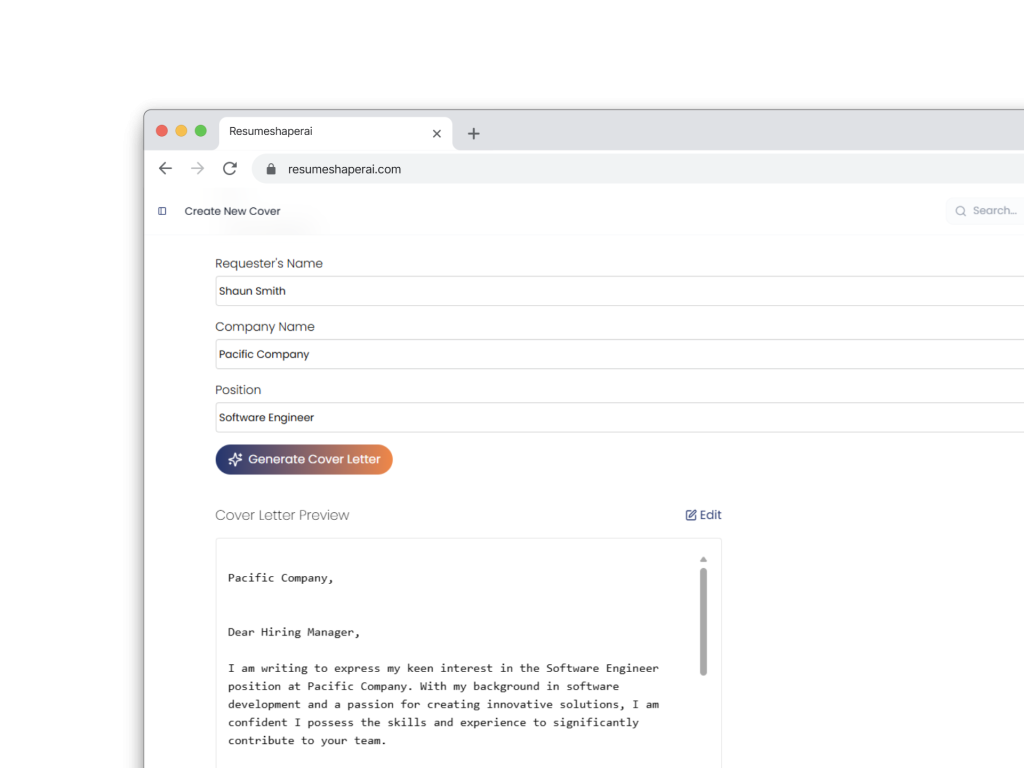
AI can help you draft cover letters tailored to each job description. These tools:
Highlight your most relevant achievements.
Suggest phrasing that aligns with the company’s tone.
Reduce writer’s block by providing templates and drafts.
Why it works: A well-crafted cover letter can differentiate you, especially in competitive industries. AI saves time while maintaining a professional tone.
Tip: Add a personal touch by referencing the company’s culture, mission, or recent achievements. AI can draft the structure, but you should add authenticity.
Create a free cover letter here with ResumeShaperAI
3. Job Matching & AI Recommendations
AI job matching platforms analyze your skills, experience, and preferences to suggest jobs you may not find through traditional search engines. They:
Reduce time spent scrolling through irrelevant postings.
Highlight hidden opportunities based on your profile.
Rank opportunities based on match quality.
Why it works: These platforms go beyond keyword searches and leverage algorithms to match you with jobs that fit your unique skill set.
Example tools: LinkedIn AI recommendations, Indeed Resume, ResumeShaperAI Job Board.
4. Interview Preparation with AI
AI-powered interview coaches are growing in popularity. They can:
Simulate real interview questions for your target role.
Provide feedback on tone, pacing, and filler words.
Suggest improvements for storytelling and STAR method responses.
Why it works: Practicing with AI allows you to rehearse without judgment, helping you build confidence before a real interview.
Example tools: Interviewing.io, Big Interview, VMock.
5. Networking Insights
Some AI tools analyze social networks and online presence to suggest connections that could help your career. They can:
Identify people in your field worth reaching out to.
Suggest personalized messages for outreach.
Track responses and follow-ups.
Why it works: Networking is still one of the most powerful ways to get job opportunities. AI helps you identify the right people and craft messages that increase your chances of meaningful connections.
What Fails: Common AI Job Hunting Pitfalls
While AI has incredible potential, it’s not a magic bullet. Here are common ways AI falls short:
1. Overreliance on Templates
AI often generates generic resumes and cover letters. If overused, this can result in applications that look identical to others. Recruiters can spot cookie-cutter applications, which reduces your chances of being called for an interview.
Avoid: Simply copying AI suggestions verbatim. Instead, customize the content to reflect your unique voice.
2. Keyword Stuffing in Resumes
Some AI tools suggest stuffing resumes with keywords to pass ATS filters. While this may help technically, it can make your resume awkward to read. Recruiters are humans, and they notice forced language.
Avoid: Excessive keyword stuffing. Focus on natural, relevant phrasing.
3. Blindly Following Job Match Algorithms
AI job matching isn’t perfect. Some platforms may suggest jobs that are technically a match but not aligned with your career goals, salary expectations, or company culture.
Avoid: Applying to every AI-recommended job without research. Always review the job description and company before applying.
4. Overconfidence in AI Interview Prep
AI interview simulations are helpful but can’t fully replicate human interaction. They may fail to assess emotional nuance, nonverbal communication, or unexpected follow-up questions.
Avoid: Relying solely on AI for interview readiness. Pair AI practice with mock interviews with friends, mentors, or career coaches.
5. Privacy Risks
Using AI platforms often involves uploading resumes, career histories, or other personal data. Not all platforms have strong privacy protections, which can expose you to data breaches or misuse.
Avoid: Sharing sensitive personal information on unverified platforms. Always check privacy policies.
What You Should Skip: Time-Wasting or Risky AI Job Hunting Practices
Some AI tools promise too much and deliver little. Here’s what you should skip entirely:
1. AI “Get Hired Fast” Promises
Any AI tool claiming it can guarantee a job or “write your way to success” overnight is misleading. Job hunting requires research, networking, and genuine effort.
Reality check: AI is a tool, not a replacement for personal branding, skill development, or human connection.
2. AI-Generated Fake Work Experience
Some platforms offer AI-generated or exaggerated work experience to improve your resume. This is highly unethical and can get you blacklisted from employers.
Reality check: Never falsify your credentials. AI should enhance what’s true, not fabricate it.
3. Relying on Chatbots for Interview Questions Only
Some people think using AI chatbots alone will prepare them for interviews. While they can suggest questions, they cannot replace personalized guidance or real-world practice.
Reality check: AI should supplement, not replace, genuine interview preparation.
4. Excessive Automation of Networking
Some AI tools promise to automatically send LinkedIn connection requests or emails en masse. While tempting, this approach often leads to spammy behavior and can hurt your professional reputation.
Reality check: Networking requires authenticity. Use AI to suggest connections or craft messages, but engage personally.
How to Use AI Effectively in Job Hunting
| Step | AI Strategy | How to Implement | Key Benefit |
|---|---|---|---|
| 1 | Resume Optimization | Use AI resume builders (e.g., ResumeShaperAI, Zety) to optimize keywords, formatting, and phrasing. | Increases chances of passing ATS and getting recruiter attention. |
| 2 | Tailored Cover Letters | Leverage AI to draft cover letters tailored to each job, then personalize with company-specific details. | Saves time while maintaining professionalism and relevance. |
| 3 | Job Discovery & Matching | Use AI job platforms to find opportunities based on skills, experience, and preferences. | Identifies hidden opportunities and reduces irrelevant applications. |
| 4 | Interview Preparation | Practice with AI interview simulators, review feedback on answers, tone, and pacing. | Builds confidence and improves performance before real interviews. |
| 5 | Networking Insights | Use AI to suggest valuable connections, draft outreach messages, and track engagement. | Expands professional network strategically and efficiently. |
| 6 | Data-Driven Research | Use AI to analyze company trends, culture, and recent news before interviews or applications. | Enables informed decisions and stronger personalized applications. |
| 7 | Continuous Improvement | Track AI feedback and results, adjust resumes, applications, and approaches accordingly. | Optimizes job search strategy over time for better outcomes. |
Step 1: Start with a Solid Resume Foundation
Use AI to optimize your resume, but ensure it accurately reflects your experience and achievements. Focus on clarity, quantifiable results, and readability.
Step 2: Tailor Applications Strategically
Leverage AI for draft cover letters and keyword suggestions, but personalize each application. Include company-specific references and unique contributions you can bring.
Step 3: Use AI for Research & Job Discovery
Let AI tools help you discover roles and companies that match your skills and interests, but verify each opportunity manually. Research company culture, salary, and growth potential.
Step 4: Practice, Don’t Memorize
AI interview prep is useful for practice and feedback. Record yourself, review AI insights, and combine them with live practice with a mentor or friend.
Step 5: Balance Automation with Personal Touch
AI is excellent for efficiency, but human interaction is irreplaceable. Send personalized messages, attend networking events, and engage on professional platforms authentically.
Step 6: Stay Informed About Privacy
Always vet AI platforms for security and privacy. Avoid sharing sensitive information unnecessarily and be aware of how your data may be used.
The Future of AI in Job Hunting
AI is evolving rapidly, and future tools may offer:
Smarter job matching with predictive career insights.
AI-driven skill assessments tailored to specific industries.
Personalized coaching for career growth and interview performance.
However, human judgment, creativity, and networking will always be essential. The best approach is a hybrid one: use AI to streamline, analyze, and optimize, but rely on personal effort and authenticity to seal the deal.
Conclusion
AI has immense potential to transform job hunting—but only when used wisely. The tools that work—resume builders, tailored cover letters, job matching, and interview practice—can save time and increase your chances of success. The strategies that fail—overreliance on templates, keyword stuffing, and blind trust in algorithms—can slow you down or harm your credibility. And the practices you should skip entirely—fake experiences, over-automation, and misleading “get hired fast” promises—can put your career at risk.
The key takeaway: treat AI as a powerful assistant, not a replacement for strategy, effort, and authenticity. When combined with personal branding, skill development, and genuine networking, AI can help you find the right job faster and smarter.
Create your resume today at ResumeShaperAI.
Frequently Asked Questions About Using AI for Job Hunting
1. How can AI help with job hunting?
AI helps job seekers optimize resumes, tailor cover letters, discover relevant job listings, and prepare for interviews. It analyzes data to match your skills with the right opportunities and saves time during the job search process.
2. What are the best AI tools for job seekers?
Top AI tools include ResumeShaperAI for resume building, LinkedIn AI for networking insights, Interview Warmup by Google for interview practice, and Kickresume for polished templates.
3. Can AI write a cover letter for me?
Yes, AI can generate a strong draft of your cover letter based on your resume and job description. However, it’s best to personalize it with your voice, examples, and enthusiasm to make it sound authentic.
4. Are AI resume builders ATS-friendly?
Most modern AI resume builders are ATS-optimized, meaning they use proper formatting and keywords to help your resume pass applicant tracking systems and reach recruiters.
5. What should I avoid when using AI for job hunting?
Avoid relying entirely on AI. Don’t use fake information, overstuff keywords, or apply blindly to jobs without research. Always verify and personalize AI-generated content.
6. Is it safe to upload my resume to AI tools?
Only use trusted platforms with clear privacy policies. Avoid sharing sensitive information like home addresses or confidential data unless you’re sure of the site’s security.
7. Will AI replace human recruiters?
No. AI assists with matching and screening but can’t replace human judgment. Recruiters still assess soft skills, cultural fit, and emotional intelligence — areas where humans excel.